
12,91€/liter inc. 23% VAT
Product dyed, not returnable.

Our GoTherm® water-based thermal insulation coatings are universal products made of components from leading Polish manufacturers.
The GoTherm® coating comes in two varieties, which are colloquially known as thermal insulation mass and thermal insulation paint. The mass version (thick product) has a consistency similar to putty and should be applied with a spatula/trowel, while the paint version (liquid product) has a consistency similar to emulsion paints, so it can be applied with a brush, roller or painting unit.
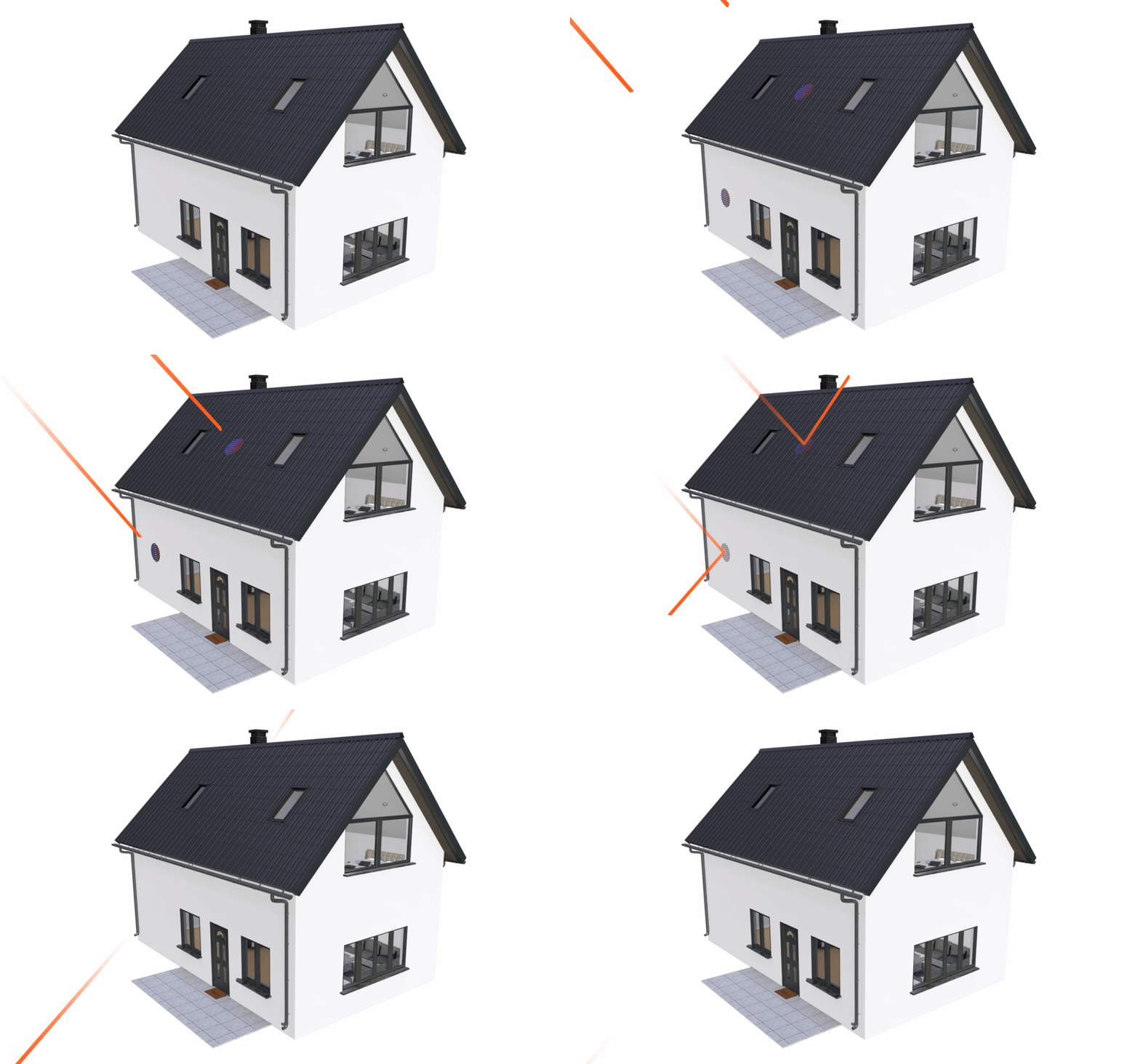
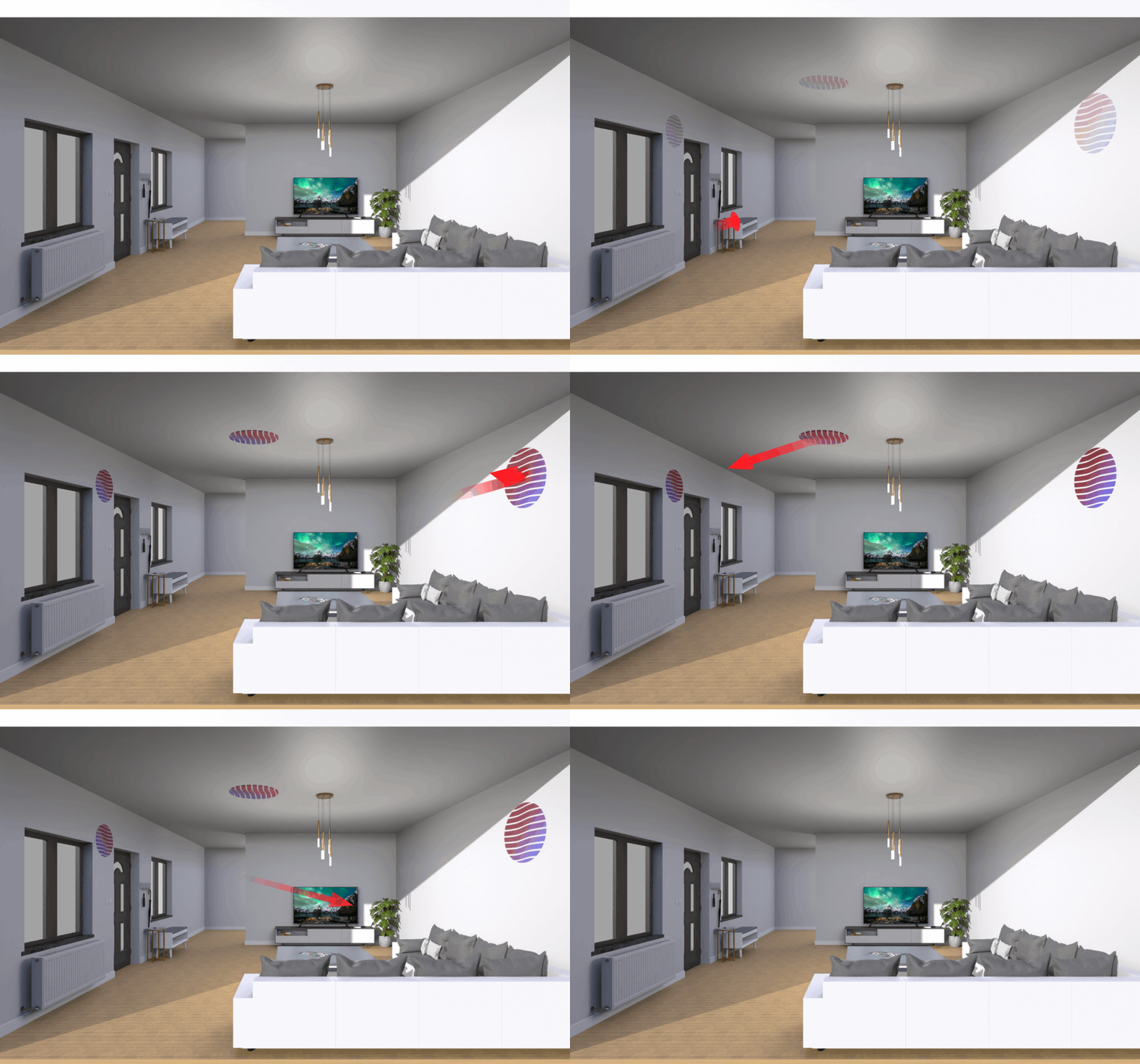
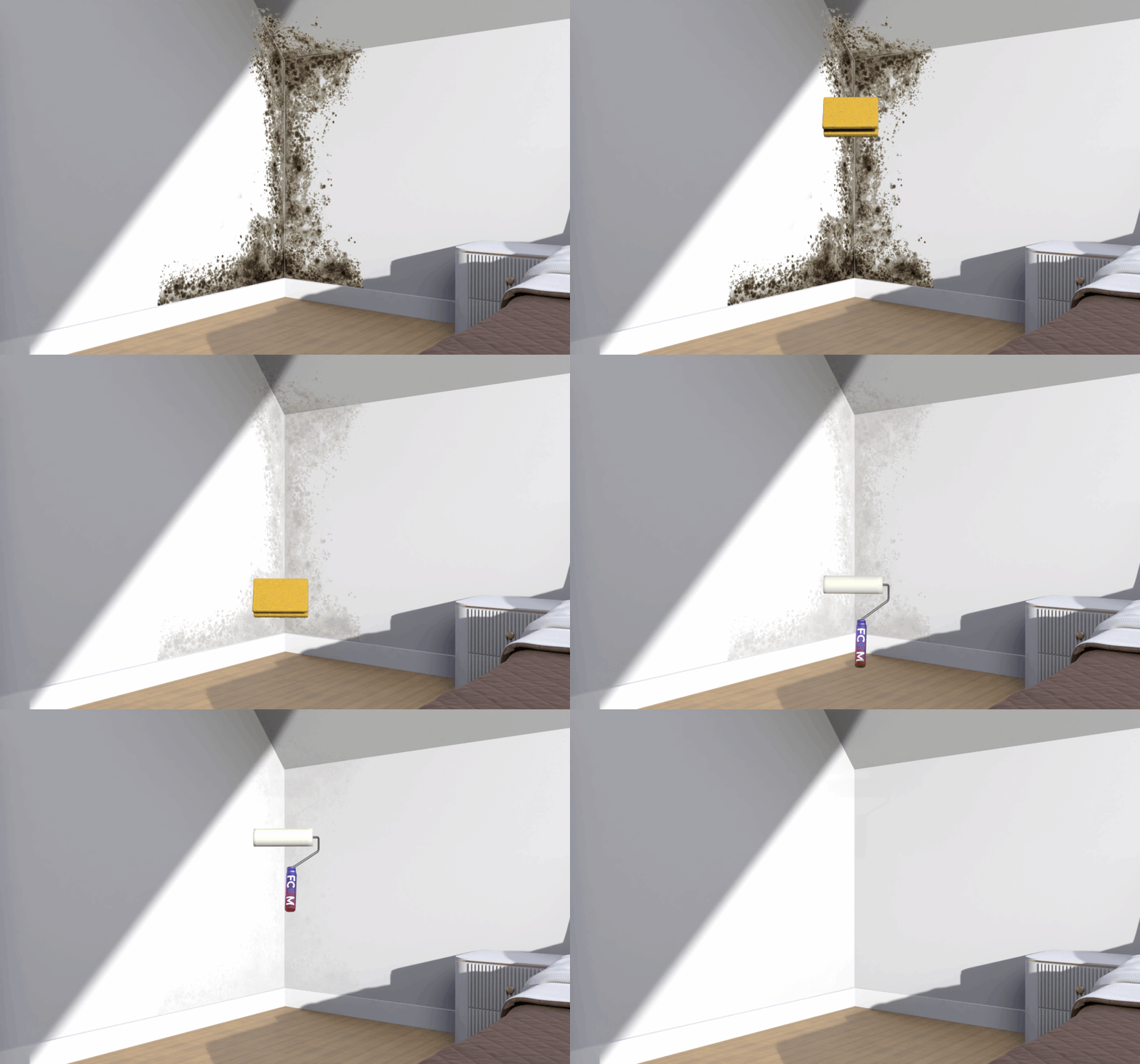
GoTherm® is used to make both external and internal thermal insulation and a protective coating for building partitions, protection against burns from hot surfaces. It has fungicidal and bactericidal properties and prevents the precipitation of condensate at large temperature differences.
Our product is water-soluble, so it is friendly to people and the environment!
While the standards allow the maximum content of VOCs (Volatile Organic Compounds) in paints and varnishes at the level of 30 g / l (for internal use) or 130 g / l (for external use), GoTherm contains only trace amounts of them – 0.6 g / l!
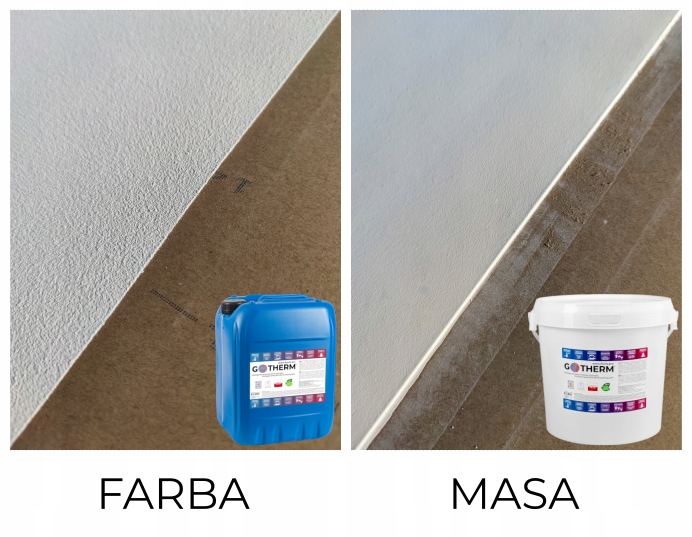
When painting with thermal insulation paint (roller or paint gun), a structure is obtained, which results from the high content of glass microspheres in the product.
Achieving a smooth finish is possible only by spreading the thermal insulation mass (with a trowel or spatula), which, however, requires experience and skills in applying the plaster.
| Weight | 3,6 kg |
|---|---|
| Capacity | 2 liters, 5 liters, 25 liters |
| Packaging | 2L, 5L, 10L (GoTherm® paint) 2L, 5L (GoTherm® weight) |
| Performance | 1 L per1 m² for a coating thickness of 1 mm |
| Drying time | 2 to 24 hours depending on the ambient temperature and humidity |
| Color | White The paint can be colored in accordance with the FCOM color palette |
| Application | Construction, Industry Inside and out |
| Directions for Use | brush, roller, paint unit (GoTherm® paint) trowel / putty (GoTherm® mass) |
| Maximum unit pressure | 10 bar (145 Psi) |
| Insulation* | comparable to approx. 6 cm of styrofoam |
| Total Specular Reflection (TSR) | 90% |
| Operating temperature | -30°C – +180°C |
| Warranty period | 5 years |
| GoTherm® Paint | GoTherm® mass | |
|---|---|---|
| Packaging | 2L, 5L, 10L | 2L, 5L |
| Performance | 1 L per1 m² for a coating thickness of 1 mm | |
| Drying time | 2 to 24 hours (depending on the ambient temperature and humidity) | |
| Color | White, colored according to the FCOM color palette | White |
| Application | Industry, Construction Inside and out | |
| Directions for Use | brush, roller, paint sprayer | trowel / putty knife |
| Maximum unit pressure | 10 bar (145 Psi) | |
| Insulation* | comparable to approx. 6 cm of styrofoam | |
| Total Specular Reflection (TSR) | 90% | |
| Operating temperature | -30°C – +180°C | |
| Warranty period | 5 years | |
*The insulation performance of our products was determined based on our own research, comparing energy consumption when using our coatings and insulating materials with known parameters.
Customer photos and videos
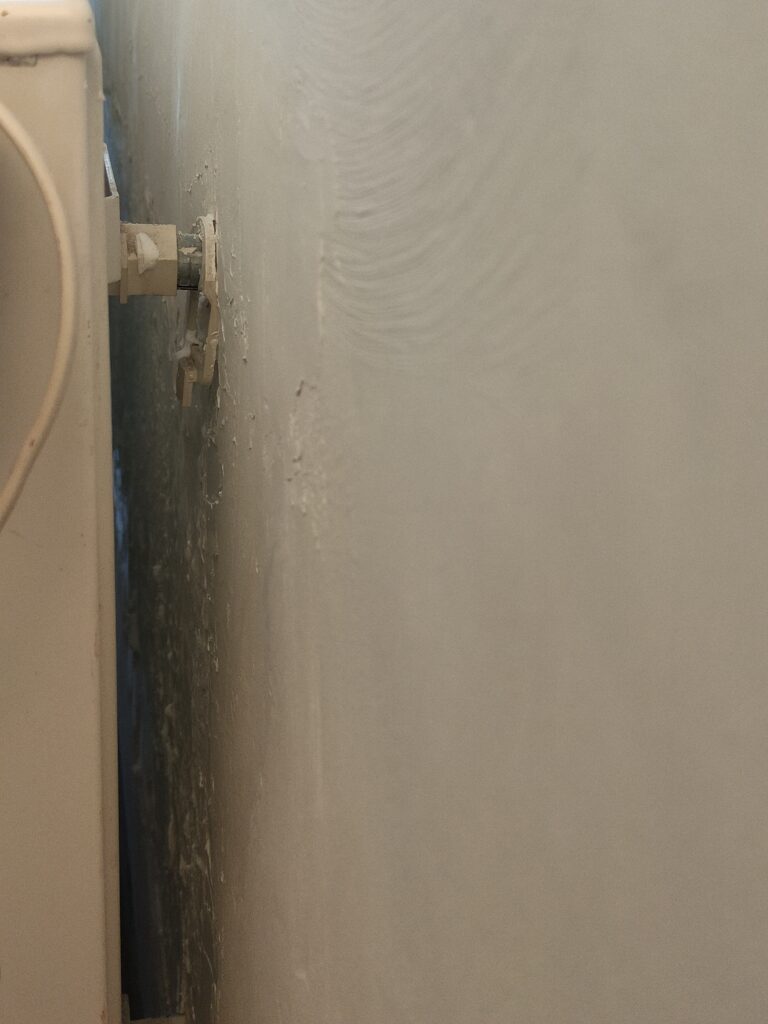

Konrad
Masa z wierzchu wiaderka była bardziej sucha. Przy dnie wytrąciła się ciecz. Postanowiłem nie mieszać tylko to wykorzystać. Rozrzedzoną frakcją pokryłem za kaloryferem wałkiem na teleskopie. Frakcja górna, gęstsza, suchsza była trudna do położenia na gładko. Nastepnym razem rozrzedziłbym delikatnie w oddzielnym naczyniu i uzyskam gładką powierzchnię.
Jacek
Proces nakładania długi i żmudny ale efekt rewelacja 😁
Sorry, no reviews match your current selections
The cost of delivery will vary depending on the quantity and types of products. Delivery cost calculation will be available on the shopping cart page and order page, after adding products to the cart and entering the delivery address.
Orders placed on business days before 11:00 a.m. are shipped the same business day.



Carriers’ regulations:
Cash on delivery payment does not apply to non-prefabricated products manufactured according to the customer’s specifications, such as a dyed product.


Es gibt derzeit eine Sonderaktion für 2-Liter-Gebinde unserer Wärmedämmbeschichtungen! Legen Sie maximal 1 Stück einer beliebigen Beschichtung in den Warenkorb und Sie erhalten automatisch 50% Rabatt auf dieses Produkt!
No worries, our products can be transported in sub-zero temperatures! It is enough to leave the frozen product indoors for one day!
Due to the upcoming Easter holidays, we are closed and will return on Tuesday, April 7, 2026.
We wish you a peaceful and healthy Easter!


Masa spełniła swoje zadanie.
Polecam
Masa z wierzchu wiaderka była bardziej sucha. Przy dnie wytrąciła się ciecz. Postanowiłem nie mieszać tylko to wykorzystać. Rozrzedzoną frakcją pokryłem za kaloryferem wałkiem na teleskopie. Frakcja górna, gęstsza, suchsza była trudna do położenia na gładko. Nastepnym razem rozrzedziłbym delikatnie w oddzielnym naczyniu i uzyskam gładką powierzchnię.
Dobra przyczepność . Łatwość nakładania. Wysoka skuteczność izolacji.
Farba izoluje od zimna. W dotyku jest jakby ciepła